

In moments of global crisis, voices from unexpected places often rise the loudest. New York City Mayor Zohran Mamdani has stepped firmly into the international spotlight after strongly criticizing a major U.S. military operation in Venezuela that reportedly led to the capture of President Nicolás Maduro and his wife, Cilia Flores. His response has sparked intense debate, not just in Washington, but across cities and communities far beyond U.S. borders.
For Mamdani, this was not just a foreign policy headline. It was a moral line.
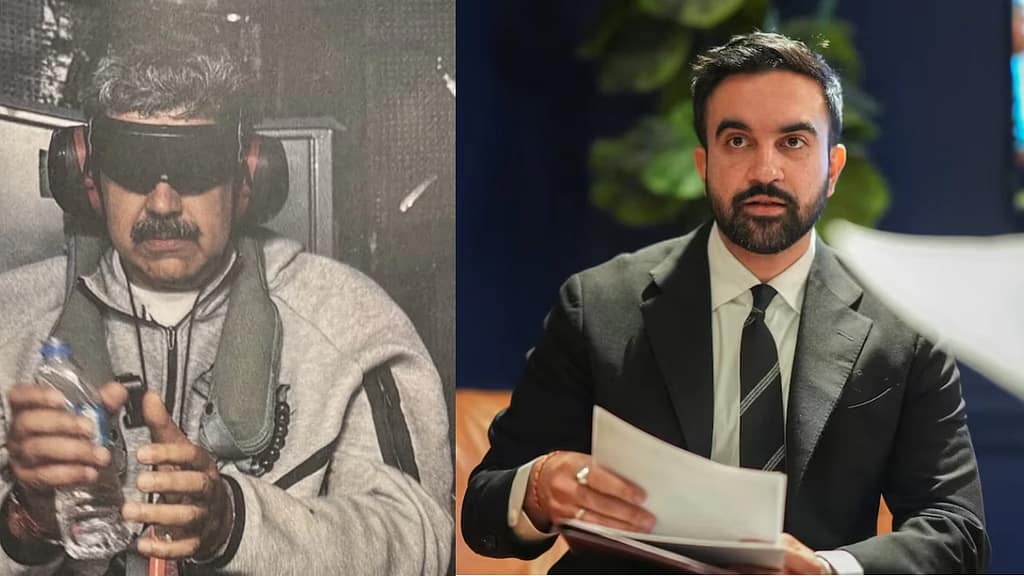
A Mayor Takes a Stand Beyond City Limits
Known for his outspoken positions and people-first politics, Mamdani did not stay silent as news broke of the U.S. operation. While the action was framed by federal officials as a strategic move, the New York City mayor publicly questioned both its legality and its human cost.
In statements following the reports, Mamdani expressed deep concern over the use of military force to remove or detain a foreign leader, warning that such actions risk destabilizing entire regions and setting dangerous global precedents.
His message was clear: power should not replace diplomacy.
Strong Opposition to Military Intervention
Mamdani’s criticism focused on what he described as a pattern of intervention that often leaves ordinary people to suffer the consequences. He argued that military actions, especially those carried out without broad international consensus, rarely bring lasting peace and often deepen humanitarian crises.
By opposing the operation, Mamdani aligned himself with a growing group of political leaders and activists who believe that regime change through force undermines international law and fuels long-term instability.
A Voice Reflecting Immigrant and Global Communities
New York City is home to millions of immigrants, including large Latin American communities with deep ties to countries affected by U.S. foreign policy. Mamdani’s stance resonated strongly among residents who see events in Venezuela not as distant geopolitics, but as personal and painful realities affecting families and futures.
Supporters praised the mayor for speaking with empathy and courage, saying his response reflected the lived experiences of a truly global city.
Praise, Pushback, and Political Risk
As expected, Mamdani’s comments have drawn both admiration and criticism. Supporters view him as principled and unafraid to challenge powerful institutions. Critics argue that foreign policy lies beyond the scope of a city mayor’s role and accuse him of undermining national security narratives.
Yet Mamdani appears unfazed by the backlash. His approach suggests that moral leadership, in his view, does not stop at city borders.
A Broader Debate About America’s Role in the World
The mayor’s remarks have added fuel to a larger national conversation about the limits of U.S. power, the ethics of military intervention, and the responsibility of leaders to question force even when it is politically inconvenient.
By weighing in, Mamdani has positioned himself not just as a city administrator, but as a moral voice in a turbulent global moment.
What This Moment Signals
Whether one agrees with him or not, Zohran Mamdani’s response highlights a shift in political culture, where local leaders feel empowered to speak on global justice and human rights. It also reflects a growing skepticism among younger and more diverse political figures toward traditional interventionist policies.
In a world where actions taken thousands of miles away can echo through neighborhoods at home, silence is no longer seen as neutral.
Disclaimer
This article is based on reported developments and public reactions surrounding a U.S. military operation in Venezuela. Details and official confirmations may evolve as more information becomes available. The piece is intended for informational and analytical purposes only.
Discover more from News Diaries
Subscribe to get the latest posts sent to your email.