
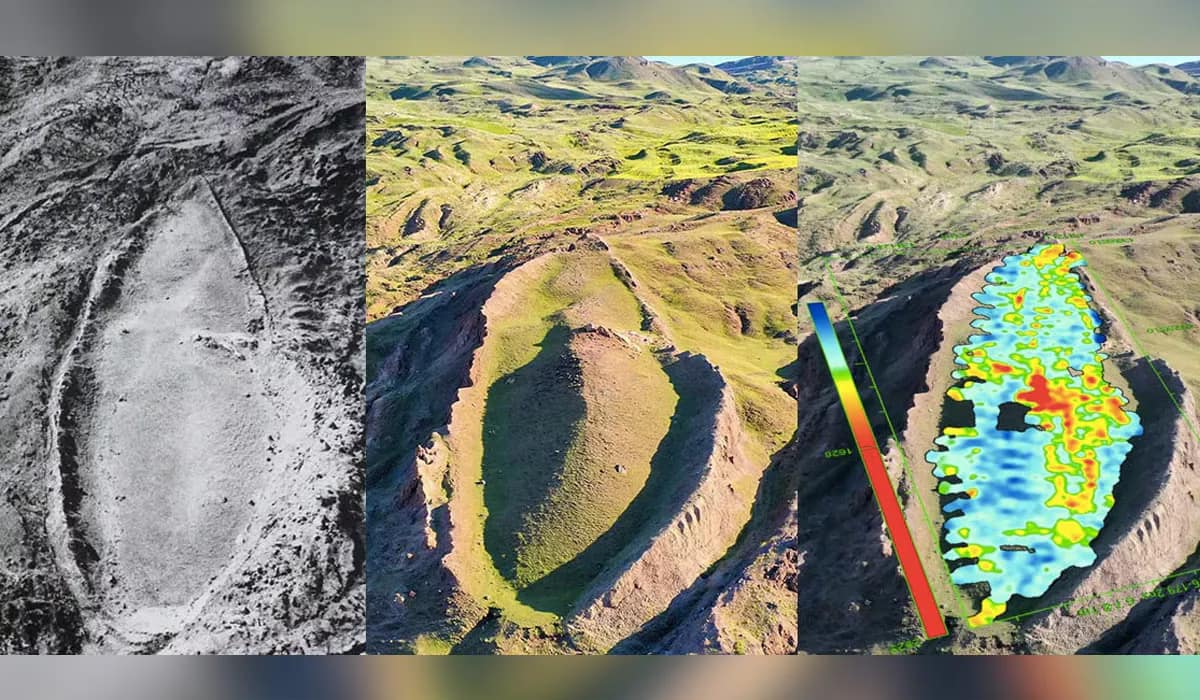
For centuries, the story of Noah’s Ark has remained one of the Bible’s most enduring mysteries. Now, a mysterious boat-shaped formation in the mountains of eastern Turkey has once again drawn attention, with researchers involved in its investigation claiming that a major breakthrough may have been made.
The formation, located at the Durupınar site near Mount Ararat, has long been linked by some researchers to the legendary vessel described in the Book of Genesis.
Some researchers have gone as far as saying the latest findings have effectively “100% confirmed” the discovery. However, the claim remains controversial, and the formation has not been universally accepted by archaeologists or geologists as the remains of Noah’s Ark.
The Ancient Story of Noah’s Ark
According to the Bible, Noah was instructed by God to build a huge vessel before a devastating flood covered the Earth.
The story says Noah entered the Ark with his family and animals, allowing life to survive the catastrophe. After the floodwaters receded, the vessel was said to have come to rest in the mountains of Ararat.
Biblical chronologies interpreted by some traditions place the flood more than 4,300 years ago, although the Bible itself does not provide a universally agreed modern calendar date for the event.
The story has fascinated historians, religious scholars and explorers for generations.
A Strange Formation in the Turkish Mountains
The Durupınar Formation is a large, boat-shaped geological feature in eastern Turkey. Its unusual appearance has made it a focus of Noah’s Ark searches for decades.
The formation is located near Mount Ararat, one of Turkey’s most famous mountains and a location traditionally associated with the Ark story.
From certain angles, the mound appears remarkably similar to the outline of a massive vessel. That resemblance has encouraged some researchers to investigate whether something artificial could be hidden beneath the surface.
Researchers Say the Evidence Is Significant
Researchers studying the site have argued that features found around the formation could point toward human activity rather than an entirely natural geological structure.
Their interpretation has led to renewed claims that the site could contain remnants associated with the Ark.
The strongest statements have described the discovery as essentially confirmed. But such language represents the position of the researchers involved in the investigation, rather than a scientific consensus.
For a claim of this magnitude to become widely accepted, independent researchers would need to examine the evidence and determine whether the features can be explained naturally or whether they genuinely indicate an ancient human-made structure.
Is the Formation Really Man-Made?
One of the biggest questions surrounding the Durupınar site is whether its unusual shape was created by people or by geological processes.
Supporters of the Ark theory argue that the formation’s dimensions and shape deserve further investigation. They believe the site could preserve material connected to an enormous ancient vessel.
Skeptics, however, have argued that the formation can be explained through natural geological processes. That disagreement has remained at the heart of the controversy.
Finding unusual shapes or materials at the site does not automatically establish that they belonged to Noah’s Ark.
Why the ‘4,300-Year-Old’ Claim Matters
If the formation were ever conclusively identified as an ancient vessel dating back thousands of years, it would represent an extraordinary archaeological discovery.
The biblical flood narrative is one of the world’s best-known ancient stories, and evidence of a gigantic vessel from the period proposed by some Ark researchers would attract enormous attention from historians, archaeologists and religious scholars.
But determining an object’s age and determining its identity are two different questions. Even if ancient material were discovered at the site, researchers would still need to establish exactly what it was, when it was created and whether it had any connection to the biblical account.
The Mystery Is Far From Over
The latest claims have breathed new life into one of history’s most famous archaeological mysteries.
For believers, the Durupınar Formation remains a fascinating possible location for the Ark described in Genesis. For scientists and archaeologists, the key issue is whether independent evidence can demonstrate that the formation is actually a human-built structure and, ultimately, connect it to the biblical story.
Until that evidence is independently verified and accepted by the wider scientific community, the claim that Noah’s Ark has been “100% confirmed” should be treated as a claim made by researchers involved in the discovery rather than an established historical fact.
A Discovery That Keeps the Ancient Mystery Alive
Whether the strange formation ultimately proves to be an ancient human-made structure or a remarkable product of nature, the Durupınar site continues to capture the imagination.
More than four millennia after the flood described in biblical tradition, the possibility of finding Noah’s legendary vessel remains one of the world’s most intriguing archaeological mysteries.
For now, the search continues—and the latest findings are likely to ensure that the debate over Noah’s Ark remains alive for years to come.
Disclaimer
This article discusses claims and interpretations surrounding the Durupınar Formation and the search for Noah’s Ark. Statements that the site has been “100% confirmed” as Noah’s Ark represent claims by researchers and should not be understood as an independently established archaeological fact. The biblical flood narrative and its chronology are matters of religious tradition and interpretation, while the scientific status of the formation remains disputed.
Discover more from News Diaries
Subscribe to get the latest posts sent to your email.